
How Arrest Warrants Work in Jones County
Think of a Jones County arrest warrant as a court order, not an administrative flag at the Sheriff's office. Under Iowa Code chapter 804, a case often starts when someone files a complaint before a magistrate. The magistrate weighs the facts. If they show probable cause, a belief that an offense happened and that the named person committed it, the magistrate can issue the warrant unless Iowa law allows a citation instead. Jones County sits in the Iowa District Court, Sixth Judicial District, the unified trial court. Magistrates handle many early matters there. District associate judges and district judges hold broader authority. The Jones County Attorney prosecutes cases but keeps no records and plays no part in the defense.
Jones County Warrant Issuance Path
The local record follows a sequence: complaint or citation → judicial review → warrant or summons → service and return → initial appearance and bond → disposition. A citation may replace an initial arrest when law permits.
- An officer or prosecutor presents the complaint and facts.
- An authorized judicial officer reviews the statutory basis.
- The signed order states the required legal and identifying information.
- A peace officer executes it and returns it to court.
- The docket records service, recall, quash, appearance, bond, or disposition.
A case can remain open after the warrant is served. Read each dated event.
Arrest Warrants: What They Contain
The warrant and its docket show who ordered the arrest and why. Iowa Courts Online may carry only part of that chain for a Jones County case.
| Case ID | The identifier linking charge, event, bond, and disposition, such as FECR012345. |
|---|---|
| Named subject | The person identified by the order; verify identity with the clerk. |
| Charge and count | The alleged offense and count tied to the complaint. |
| Issuing authority | The District Court judicial officer authorizing arrest. |
| Issue and return | Dates for issuance, service, officer return, or later action. |
| Bond information | Public set amount, type, posting, and disposition fields, when available. |
No Jones County bond schedule was located. The actual order controls.
Jones County Pre-Arrest Record Limits
A blank result proves nothing. Section 804.29 lets arrest-warrant applications, citations, and affidavits stay confidential until the statutory arrest, return, or initial-appearance point. Sealed, juvenile, and protected Jones County records sit outside an ordinary search too.
- Recalled
- The court withdrew the warrant.
- Quashed
- The court cancelled or invalidated it.
- Returned
- An officer sent the handled warrant back to court.
- Active
- Status language needing current confirmation.
The honest answer in Jones County is "not found in this public channel," so ask the Clerk about lawful access.
How Warrants Get Served in Jones County
The Jones County Sheriff serves the county and its contracted cities. Anamosa, Monticello, and Cascade each run their own police departments, though Cascade straddles the Jones-Dubuque line. Olin and Wyoming rely on Sheriff coverage. The Iowa State Patrol or another lawful agency can step in when jurisdiction calls for it. After an arrest, booking and an initial appearance move the case along, and the order itself controls bond and release. Jones County publishes no universal surrender procedure, no warrant-desk hours, and no promised bond amount. For nonemergency routing call the Sheriff at 319-462-4371. The Jail at 319-462-2720 answers custody and booking questions, not a verified warrant search. Save 911 for true emergencies, never a records question.
Jones County Serving Agencies Compared
Knowing the serving agency helps narrow a records request, but the Jones County case itself stays in unified District Court.
| Agency | Public role | Limit |
|---|---|---|
| Jones Sheriff | County service and routing | No published complete roster |
| Anamosa Police | City routing, 319-462-4434 | Cannot certify court records |
| Monticello Police | City routing, 319-465-3526 | No municipal court database |
| Cascade Police | Two-county routing, 563-852-3100 | Citation details identify the docket |
| U.S. Marshals | Federal service | Not a Jones state-status source |
Federal and state records must not be merged.
Arrest Warrants, Summonses, and Bench Warrants
These instruments command different acts, though each can appear in a criminal case.
| Feature | Arrest warrant | Summons | Bench warrant |
|---|---|---|---|
| Purpose | Authorizes arrest | Directs appearance | Responds to a court-order problem |
| Basis | Complaint and probable cause | Notice suited to the charge | FTA, contempt, or noncompliance |
| Response | Confirm and arrange lawful appearance | Appear as directed | Ask about recall or quash |
Iowa Code section 805.5 covers willful failure to appear after a citation. A Jones County bench warrant that follows is separate from the original charge.
Jones County Search Warrants Differ
A search warrant is a different animal. Under Iowa Code chapter 808, it authorizes a search of a place, not a roundup of wanted people. Its application and affidavit stay confidential for a separate period tied to execution and return. Iowa's electronic search-warrant system is internal judicial and law-enforcement infrastructure, used even by rural courts. It is not a public Jones County warrant lookup, and access stays limited.
Key Point: A public arrest docket and an unexecuted investigative search warrant have different purposes and disclosure rules.
Jones County Arrest Warrant Checks
Jones County publishes no warrant roster, and Iowa runs no statewide public warrant registry. Begin with Iowa Courts Online, the state's case and docket index. Search by name or by case or citation number, then choose Jones County. Read the docket events themselves. A case marked "open" does not prove an active warrant. For name searches, enter at least two letters of the last name, and add a first name or case type to cut down common matches. Fresh filings may lag. Search again later, or call the clerk if timing matters. For confirmation or copies, contact the Jones County Clerk of Court at 319-462-4341, or use the public terminal at 500 W Main Street, Anamosa. Hours run Monday through Friday, 8:00 a.m. to 4:30 p.m., except holidays. A good request names the record category, date range, agency, and case or citation number when you have it. Skip full Social Security numbers and other details the custodian does not need. Iowa Code chapter 22 backs requests made in person, in writing, by phone, or electronically during customary hours. Copying, postage, retrieval, review, and redaction fees may apply. Jones County sets no flat warrant-record fee. The Iowa Legislature's chapter index lays out chapter 804 in full, showing why issuance, execution, return, and confidentiality have to be read together.
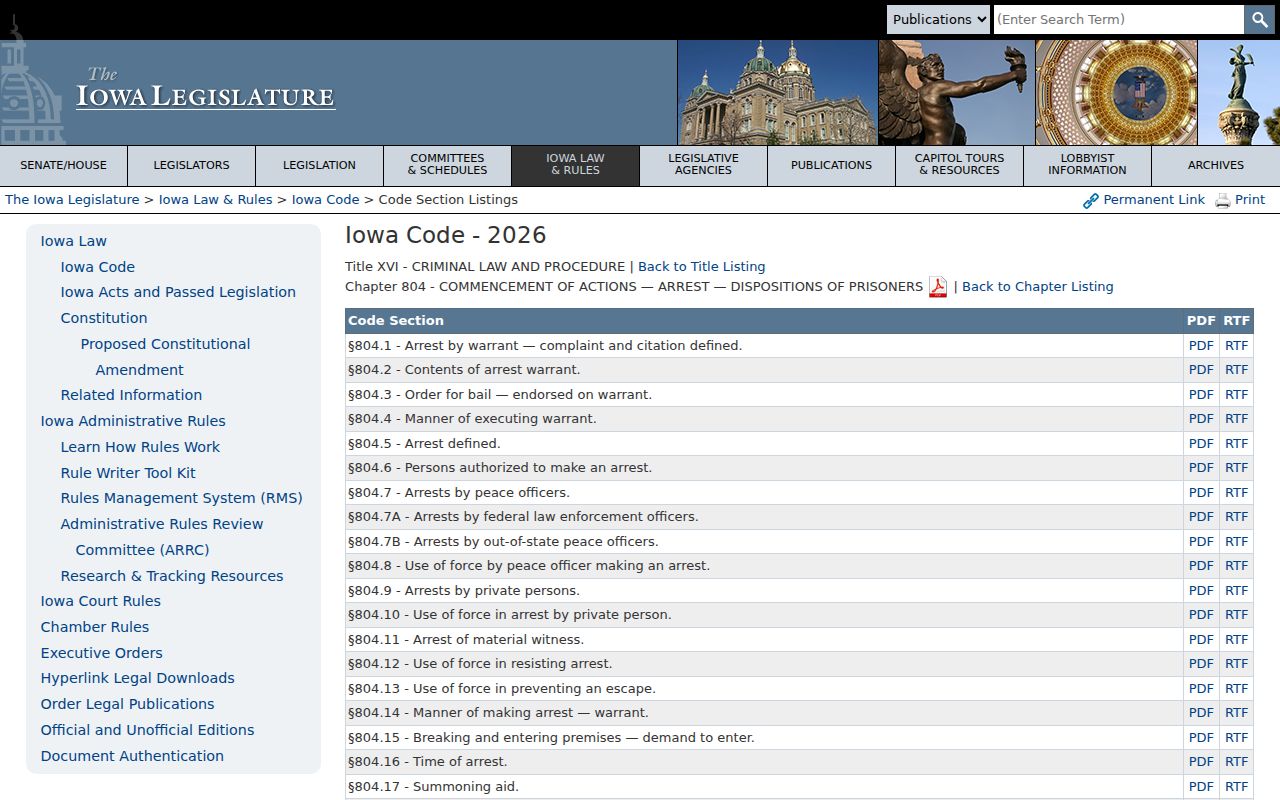
A court's warrant order and a third-party name result are not the same thing in Jones County. Federal matters run instead through the Northern District of Iowa, PACER, and U.S. Marshals channels.
Handling an Arrest Warrant in Your Name
Find the case number and copy the exact wording of the newest docket event before you do anything else. Ask the Jones County Clerk whether that entry is current. Ask if an appearance is required. Ask which process applies to your situation. A licensed Iowa lawyer can advise on voluntary appearance, bond, or a motion to recall or quash the warrant. Never assume an online payment recalls a warrant, because the signed order and the newest filed event control, not a third-party summary. If debt is involved, the County Attorney Payment Plan or an official payment may address eligible balances, but neither one replaces a court order. After you act, get an updated docket or a clerk confirmation. Ask which dated filing shows what the judge did, and whether another appearance remains set. Keep every receipt, order, and bond paper with the case ID. A payment confirmation alone can show money received without showing that the warrant was recalled. If the docket and another system disagree, describe the mismatch to the Clerk rather than paying twice or guessing which status controls. Write down the full court name, the case ID, the issue date, and the newest event before you call. Ask whether the document you want is public and how the Clerk accepts copy requests. Give your attorney the same source details if counsel contacts the court or the Jones County sheriff. An old copy of the page will not do after a hearing, a bond posting, a return, or a recall request; check for the later entry that records what the court actually did. The jail may answer booking questions when custody is involved, but it cannot replace the issuing court's order or the Clerk's filed record.
Jones County publishes no general promise about surrender timing, release, or bond, since those facts depend on the order and the case. A lawyer can explain the risk and coordinate the lawful next step. Family members should not make payments because of an unsolicited call. Use the official court number instead. Verify the case independently before sharing any personal or financial data.
Important: Speak with an attorney before surrender; Jones County publishes no universal walk-in process, bond amount, or guaranteed release terms.
The Jones County warrant records overview provides related resolution routes.